
Sales Meeting Preparation Agent
1. Executive Summary
The ABC Paints Sales Meeting Preparation Agent is an AI-powered solution designed to transform how sales representatives prepare for customer meetings. By automatically analyzing data from multiple enterprise systems, this solution generates comprehensive, personalized meeting preparation materials that enable more effective customer interactions and improved sales outcomes.
This document outlines the complete solution approach, architecture, and proof of concept implementation details.
2. Problem Statement
Sales representatives at ABC Paints face significant challenges in preparing for customer meetings due to:
- Limited time to review extensive customer data scattered across multiple systems
- Difficulty recalling specific details from previous interactions
- Lack of data-driven insights to guide sales approaches
- Insufficient visibility into customer preferences and pain points
- Limited ability to prepare tailored recommendations for each customer
These challenges result in missed opportunities, inconsistent customer experiences, and diminished sales performance.
3. Solution Approach
The ABC Paints Sales Meeting Preparation Agent addresses these challenges by:
- Automatically detecting upcoming customer meetings
- Aggregating relevant information from disparate enterprise systems
- Analyzing customer interaction history to identify patterns and preferences
- Generating actionable insights with transparent reasoning explanations
- Delivering comprehensive preparation materials to sales representatives
- Providing feedback mechanisms to continuously improve recommendations
This solution leverages advanced AI capabilities, including large language models, semantic search, and reasoning frameworks, to transform meeting preparation from a time-consuming manual process into a strategic advantage.
4. Architecture
The solution architecture encompasses multiple layers working together to deliver comprehensive meeting preparation capabilities.
graph TD
    %% User Interface Layer
    subgraph "Frontend Layer"
        UI[Web Dashboard UI]
        Mobile[Mobile Interface]
    end

    %% API & Service Layer
    subgraph "API Gateway & Service Layer"
        API[API Gateway]
        Auth[Authentication Service]
        Orchestrator[Agent Orchestration Service]
    end

    %% Core AI Components
    subgraph "AI Engine"
        LLM[Foundation LLM]
        Reasoning[Reasoning Engine]
        VectorDB[Vector Database]
        GraphDB[Graph Database]
        Memory[Conversation Memory]
    end

    %% Tools & Integration
    subgraph "Tool Integration"
        Tools[Tool Registry]
        CRM[CRM Integration]
        Calendar[Calendar Integration]
        Product[Product Catalog Integration]
    end

    %% Data Processing
    subgraph "Data Processing"
        ETL[Data Ingestion & Processing]
        Streaming[Event Streaming]
        Analytics[Analytics Engine]
    end

    %% External Systems
    subgraph "Enterprise Systems"
        CRM_System[CRM System]
        Calendar_System[Calendar System]
        Product_Catalog[Product Catalog]
        Transaction_History[Transaction History]
    end

    %% User Flow and Data Flow
    User -->|Accesses| UI
    User -->|Mobile Access| Mobile

    UI -->|API Requests| API
    Mobile -->|API Requests| API

    API -->|Authenticates| Auth
    API -->|Orchestrates| Orchestrator

    Orchestrator -->|Planning| Reasoning
    Orchestrator -->|Memory Storage| Memory
    Orchestrator -->|Invokes Tools| Tools

    Tools -->|CRM Data Access| CRM
    Tools -->|Calendar Access| Calendar
    Tools -->|Product Info| Product

    CRM -->|Retrieves Data| CRM_System
    Calendar -->|Retrieves Events| Calendar_System
    Product -->|Retrieves Catalog| Product_Catalog

    Reasoning -->|Generates Text| LLM
    Reasoning -->|Semantic Search| VectorDB
    Reasoning -->|Relationship Queries| GraphDB

    ETL -->|Processes Data| VectorDB
    ETL -->|Builds Knowledge Graph| GraphDB
    ETL -->|Extracts From| CRM_System
    ETL -->|Extracts From| Calendar_System
    ETL -->|Extracts From| Product_Catalog
    ETL -->|Extracts From| Transaction_History

    Streaming -->|Real-time Events| ETL
    Streaming -->|Triggers| Orchestrator

    Analytics -->|Monitors Usage| Orchestrator
    Analytics -->|Tracks Performance| LLM
    Analytics -->|Reports| UI

    %% Integration Flow
    VectorDB -.->|Similarity Search| Reasoning
    GraphDB -.->|Relationship Context| Reasoning
    Memory -.->|Conversation History| Reasoning

    %% Styles
    classDef frontend fill:#f9f,stroke:#333,stroke-width:2px;
    classDef service fill:#bbf,stroke:#333,stroke-width:1px;
    classDef ai fill:#bfb,stroke:#333,stroke-width:1px;
    classDef tools fill:#fbb,stroke:#333,stroke-width:1px;
    classDef data fill:#bff,stroke:#333,stroke-width:1px;
    classDef external fill:#fffbe6,stroke:#333,stroke-width:1px;

    class UI,Mobile frontend;
    class API,Auth,Orchestrator service;
    class LLM,Reasoning,VectorDB,GraphDB,Memory ai;
    class Tools,CRM,Calendar,Product tools;
    class ETL,Streaming,Analytics data;
    class CRM_System,Calendar_System,Product_Catalog,Transaction_History external;
4.1 Architecture Components
Frontend Layer
- Web Dashboard UI: Primary interface for sales representatives to access meeting preparation materials
- Mobile Interface: Provides on-the-go access for quick review before meetings
API Gateway & Service Layer
- API Gateway: Routes requests and manages API traffic
- Authentication Service: Ensures secure access with appropriate permissions
- Agent Orchestration Service: Coordinates the AI agent workflow and tool invocation
AI Engine
- Foundation LLM: Large language model for natural language understanding and generation
- Reasoning Engine: Implements Chain-of-Thought and ReAct patterns for transparent recommendations
- Vector Database: Enables semantic search across customer interactions and product information
- Graph Database: Maintains relationship context between entities (customers, products, interactions)
- Conversation Memory: Preserves context across multiple user sessions
Tool Integration
- Tool Registry: Manages available tools and their capabilities
- CRM Integration: Connects to customer relationship management systems
- Calendar Integration: Enables access to meeting schedules
- Product Catalog Integration: Provides product information and specifications
Data Processing
- Data Ingestion & Processing: ETL processes for structured enterprise data
- Event Streaming: Real-time processing of system events
- Analytics Engine: Measures system performance and business impact
Enterprise Systems
- CRM System: Customer relationship data
- Calendar System: Meeting schedules and information
- Product Catalog: Product information and specifications
- Transaction History: Past purchase data
5. Proof of Concept Implementation
The Proof of Concept (POC) implementation demonstrates core capabilities of the Sales Meeting Preparation Agent while focusing on the most essential components for validating the solution’s value.
graph TD
    %% User Interface Layer
    subgraph "Frontend Layer"
        UI[Web Dashboard UI<br>✓ Implemented]
        Mobile[Mobile Interface<br>✗ Future Enhancement]
        style Mobile fill:#f5f5f5,stroke:#999,stroke-width:1px,stroke-dasharray: 5 5
    end

    %% API Layer
    subgraph "API Layer"
        API[FastAPI Service<br>✓ Implemented]
        Auth[Authentication Service<br>✗ Future Enhancement]
        style Auth fill:#f5f5f5,stroke:#999,stroke-width:1px,stroke-dasharray: 5 5
    end

    %% Core AI Components
    subgraph "AI Engine"
        LLM[Foundation LLM<br>✓ HuggingFace Mistral-7B-Instruct]
        Reasoning[Reasoning Engine<br>✓ LangChain ReAct Agent]
        VectorDB[Vector Database<br>✓ ChromaDB Implementation]
        GraphDB[Graph Database<br>✗ Future Enhancement]
        Memory[Conversation Memory<br>✗ Future Enhancement]
        style GraphDB fill:#f5f5f5,stroke:#999,stroke-width:1px,stroke-dasharray: 5 5
        style Memory fill:#f5f5f5,stroke:#999,stroke-width:1px,stroke-dasharray: 5 5
    end

    %% Mock Services
    subgraph "Mock Services"
        CRM[CRM Mock Service<br>✓ JSON-based Implementation]
        Calendar[Calendar Mock Service<br>✓ JSON-based Implementation]
        Product[Product Catalog Mock Service<br>✓ JSON-based Implementation]
    end

    %% Data Generation
    subgraph "Data Generation"
        Generator[Region-Specific Data Generator<br>✓ Implemented]
    end

    %% Advanced Components
    subgraph "Advanced Components"
        ETL[Data ETL Processes<br>✗ Future Enhancement]
        Streaming[Event Streaming<br>✗ Future Enhancement]
        Analytics[Analytics Engine<br>✗ Future Enhancement]
        style ETL fill:#f5f5f5,stroke:#999,stroke-width:1px,stroke-dasharray: 5 5
        style Streaming fill:#f5f5f5,stroke:#999,stroke-width:1px,stroke-dasharray: 5 5
        style Analytics fill:#f5f5f5,stroke:#999,stroke-width:1px,stroke-dasharray: 5 5
    end

    %% User Flow and Data Flow
    User -->|Access via Browser| UI
    UI -->|API Requests| API

    API -->|Triggers| Reasoning

    %% Tool Access
    Reasoning -->|Uses| LLM
    Reasoning -->|Queries| VectorDB
    Reasoning -->|Accesses| CRM
    Reasoning -->|Accesses| Calendar
    Reasoning -->|Accesses| Product

    %% Data Generation
    Generator -->|Creates Mock Data| CRM
    Generator -->|Creates Mock Data| Calendar
    Generator -->|Creates Mock Data| Product
    Generator -->|Creates Documents| VectorDB

    %% Styles
    classDef implemented fill:#d4edda,stroke:#28a745,stroke-width:1px;
    classDef simplified fill:#fff3cd,stroke:#ffc107,stroke-width:1px;
    classDef future fill:#f5f5f5,stroke:#999,stroke-width:1px,stroke-dasharray: 5 5;

    class UI,API,VectorDB,CRM,Calendar,Product,Generator implemented;
    class LLM,Reasoning simplified;
    class Mobile,Auth,GraphDB,Memory,ETL,Streaming,Analytics future;

    %% Legend
    subgraph "Legend"
        Impl[✓ Implemented]
        Simp[✓ Simplified Implementation]
        Fut[✗ Future Enhancement]
        style Impl fill:#d4edda,stroke:#28a745,stroke-width:1px;
        style Simp fill:#fff3cd,stroke:#ffc107,stroke-width:1px;
        style Fut fill:#f5f5f5,stroke:#999,stroke-width:1px,stroke-dasharray: 5 5;
    end
5.1 Implemented Components
The POC includes the following key components:
- Web Dashboard: FastAPI-based web interface with Jinja2 templates
- AI Agent: LangChain-based implementation with reasoning capabilities
- Mock Enterprise Services: Simulated CRM, calendar, and product catalog data
- Vector Database: ChromaDB implementation for semantic search
- Region-Specific Data Generation: Support for multiple regions and markets
5.2 Technology Stack
The POC leverages the following technologies:
- Python: Primary programming language
- LangChain: Framework for building AI agents and workflows
- FastAPI: Web framework for API and interface development
- ChromaDB: Vector database for semantic search capabilities
- HuggingFace Models: For embedding generation and language processing
- Docker: Containerization for consistent deployment
5.3 Data Model
The POC implements a data model that includes:
- Customers: Company information, industry, size, and primary contacts
- Interactions: Past meetings, calls, emails, and site visits
- Transactions: Purchase history with product details
- Products: Complete catalog with categories and specifications
- Meetings: Upcoming calendar events with customer context
6. Key Capabilities
The Sales Meeting Preparation Agent provides the following core capabilities:
6.1 Automated Meeting Detection
The system automatically identifies upcoming customer meetings from calendar data and triggers preparation workflows with appropriate lead time.
6.2 Comprehensive Customer Intelligence
The solution aggregates information from multiple sources to provide a complete view of:
- Company profile and background
- Relationship history and key events
- Past interactions and communication patterns
- Purchase history and product preferences
- Identified pain points and challenges
6.3 Data-Driven Recommendations
Using advanced AI reasoning, the system generates:
- Tailored talking points for each customer
- Product recommendations based on identified needs
- Objection handling guidance
- Suggested next steps and follow-up actions
6.4 Transparent Reasoning
All recommendations include:
- Step-by-step explanation of the reasoning process
- Supporting evidence from customer data
- Confidence indicators for each insight
- Alternative approaches where relevant
6.5 Region-Specific Customization
The solution supports regional customization with:
- Region-appropriate company and contact information
- Local currency and formatting
- Industry-specific terminology
- Regional business patterns and preferences
7. Demonstration Flow
7.1. Setup and Preparation
Follow README.md
7.2. Demonstration Narrative
Introduction (5 minutes)
- Introduce the problem: sales reps struggling with meeting preparation
- Highlight the costs of inadequate preparation (missed opportunities, inconsistent experiences)
- Explain the solution objective: AI-assisted meeting preparation
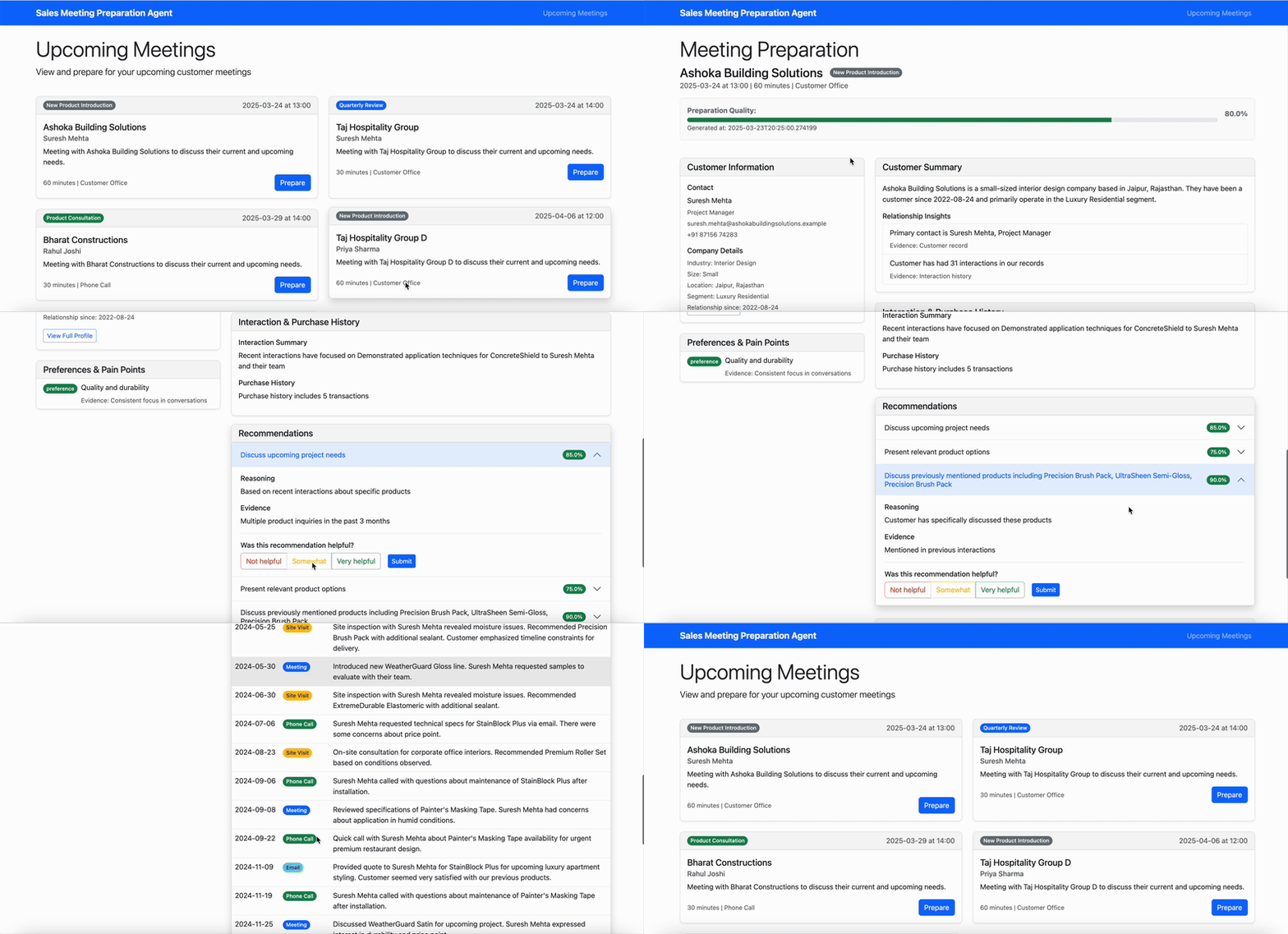
Homepage Overview (3 minutes)
- Show the homepage with upcoming meetings
- Explain how the system automatically detects meetings from the calendar
- Point out the meeting types and time information
Meeting Preparation Workflow (10 minutes)
- Select a meeting with a customer
- Walk through the preparation page sections:
- Customer summary and relationship insights
- Interaction and purchase history summaries
- Preferences and pain points
- Recommendations with transparent reasoning and confidence scores
- Suggested next steps
Transparent Reasoning (5 minutes)
- Expand a recommendation to show the detailed reasoning
- Highlight how the system cites specific evidence from customer interactions
- Demonstrate the confidence scoring system
- Explain how this transparency builds trust with sales representatives
Customer Profile Deep Dive (5 minutes)
- Navigate to the full customer profile
- Show the interaction timeline and purchase history details
- Explain how this data contributes to the preparation insights
- Highlight the relationship duration and development
Feedback Collection (2 minutes)
- Demonstrate the feedback mechanism on recommendations
- Explain how this feedback helps improve future recommendations
- Show how the system learns from sales rep input
Region-Specific Features (3 minutes)
- Highlight region-specific elements in the data
- Show how the system adapts to different markets
- Explain how this enhances relevance for global sales teams
Technical Overview (5 minutes)
- Briefly explain the architecture components
- Highlight the AI reasoning capabilities
- Explain how the system integrates with enterprise systems
- Discuss the vector database for semantic search
Q&A and Next Steps (10 minutes)
- Address questions about the POC
- Discuss the path to full implementation
- Highlight additional capabilities in the complete solution
7.3. Key Demonstration Points
When presenting the POC, emphasize these benefits:
- Time Savings: Sales reps can prepare for meetings in minutes rather than hours
- Comprehensive Intelligence: All relevant customer information in one place
- Data-Driven Insights: Recommendations based on analysis of customer patterns
- Trust Through Transparency: Clear explanations of how recommendations are generated
- Continuous Improvement: System that learns from feedback to improve over time
- Global Adaptability: Support for different regions and market expectations
8. Future Enhancements
The following enhancements are planned for the full implementation:
8.1 Additional AI Capabilities
- Sentiment analysis of customer interactions
- Predictive analytics for opportunity identification
- Competitor intelligence integration
- Multi-language support for global operations
8.2 Advanced Integration
- Real-time CRM integration with bidirectional updates
- Meeting outcome tracking and correlation
- Integration with sales enablement content repositories
- Email and communication history analysis
8.3 Mobile Experience
- Dedicated mobile application with offline capabilities
- Voice-based preparation summaries for on-the-go review
- Real-time notification of customer updates
8.4 Personalization
- Individual sales rep profile adaptation
- Learning from successful sales approaches
- Performance metrics and improvement suggestions
- Team collaboration and knowledge sharing
9. Conclusion
The ABC Paints Sales Meeting Preparation Agent represents a significant advancement in sales enablement technology. By applying advanced AI techniques to the specific challenge of meeting preparation, this solution transforms a traditionally time-consuming, manual process into a strategic advantage.
The proof of concept demonstrates the core capabilities of the system and provides a solid foundation for the full implementation. By continuing to enhance the AI reasoning capabilities, integrating with enterprise systems, and incorporating feedback mechanisms, the complete solution will deliver substantial value in terms of improved sales effectiveness, consistent customer experiences, and increased revenue.