
Internal Developer Platform
Introduction
In today’s fast-paced software development landscape, organizations are increasingly adopting Internal Developer Platforms (IDPs) to streamline their development processes and empower their engineering teams. However, the traditional understanding of IDPs has been limited to deployment automation and infrastructure management, overlooking critical aspects of the complete application lifecycle.
This guide provides a comprehensive definition of Internal Developer Platforms that addresses the full spectrum of enterprise needs, from architecture and development to deployment and operations.
Understanding Platforms in Context
A platform serves as a foundation that enhances the effectiveness of its community. Like well-designed transportation hubs that connect services and provide multiple amenities to travelers, technology platforms provide the infrastructure, tools, and services that enable developers to build, deploy, and scale applications with maximum efficiency.
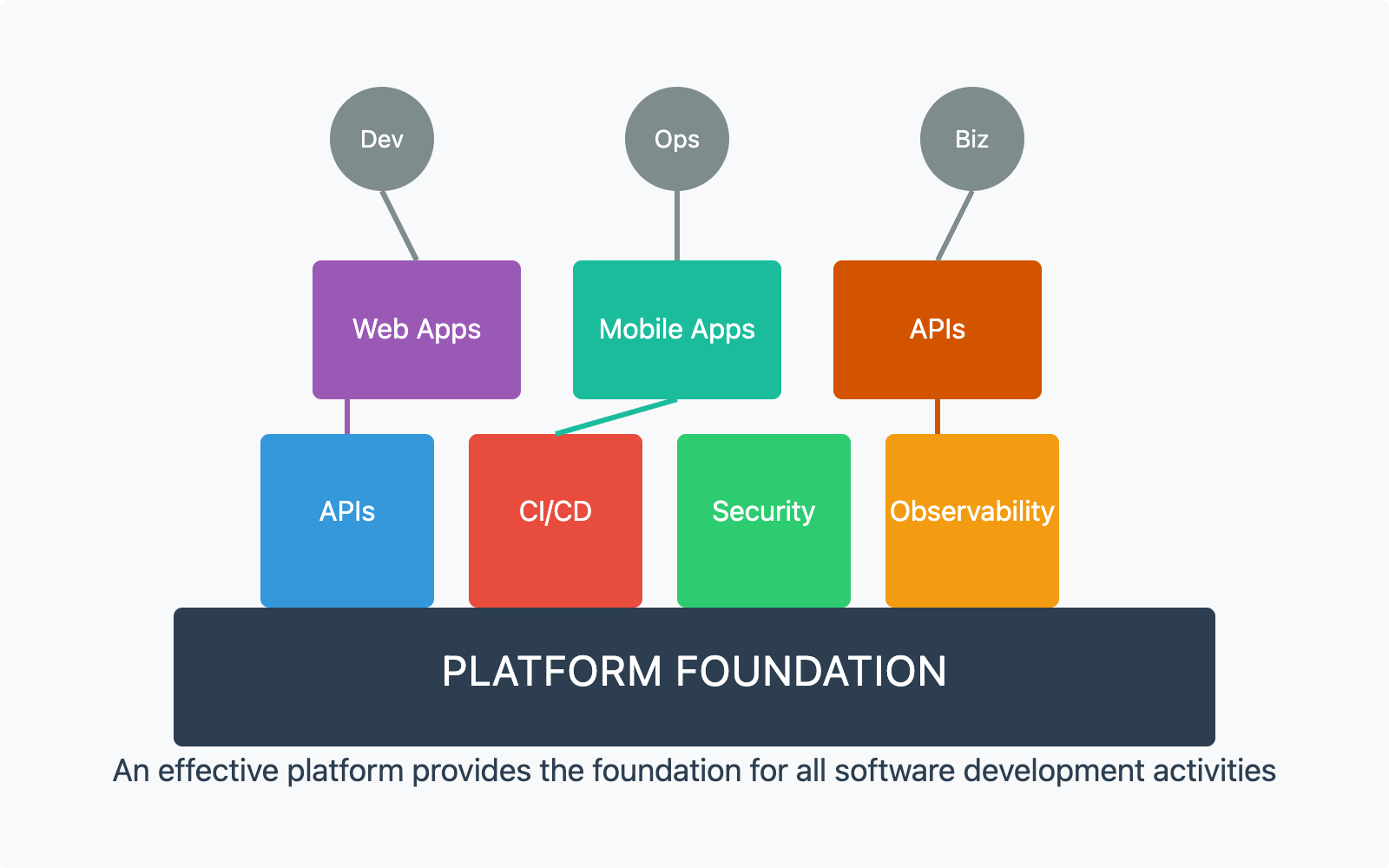
In technology terms, an effective platform abstracts away complexities, offers reusable components, and enables interoperability between different systems. The platform serves as the foundation upon which individual components and domains operate, with each element contributing to the overall ecosystem.
The Evolution of Internal Developer Platforms
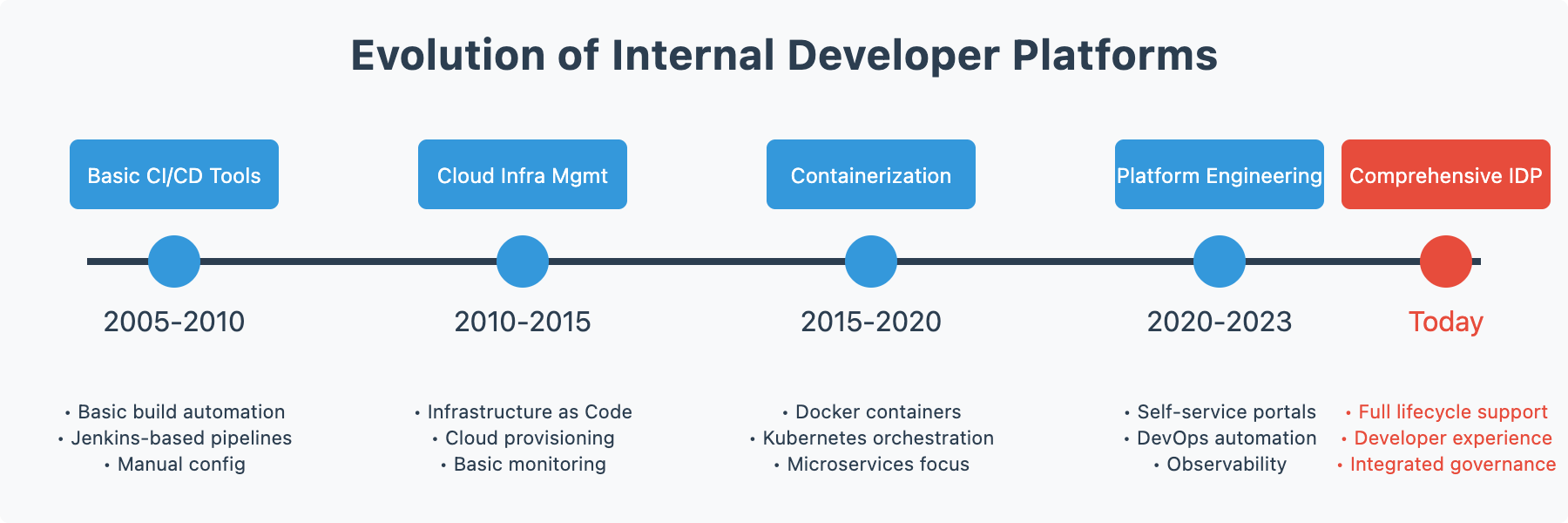
Internal Developer Platforms have evolved from simple deployment tools to comprehensive systems that manage the entire application lifecycle. This evolution has been driven by several factors:
- The increasing complexity of modern applications
- The need for faster delivery cycles
- The rise of cloud-native architectures
- Growing demands for developer autonomy and productivity
Traditional IDP Limitations
The conventional definition of IDPs focuses primarily on delivery aspects while neglecting other critical phases of the application lifecycle. This limited perspective creates significant gaps in addressing the complex needs of modern enterprises.
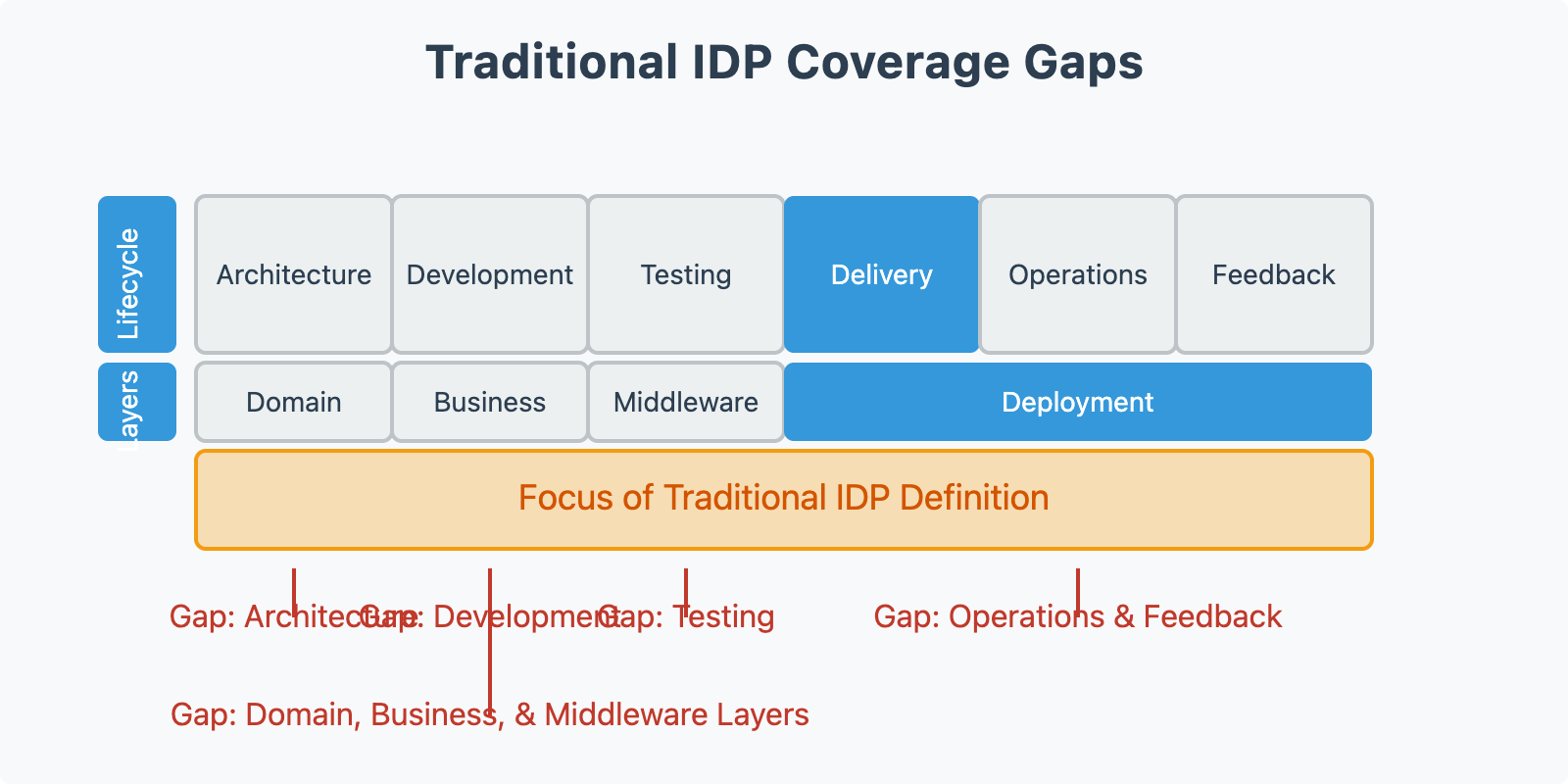
Traditional IDPs typically cover:
| Core Capability | Description |
|---|---|
| Application Configuration Management | Managing configuration in dynamic, scalable environments |
| Infrastructure Orchestration | Dynamically orchestrating infrastructure based on context |
| Environment Management | Provisioning environments on demand |
| Deployment Management | Implementing CI/CD pipelines |
| Role-Based Access Control | Managing permissions and access |
While these capabilities are valuable, they address only a portion of the application lifecycle and focus primarily on the deployment layer rather than the complete technology stack.
A Comprehensive Definition of Internal Developer Platforms
A complete Internal Developer Platform should address the entire application lifecycle, from ideation to retirement, facilitating both enterprise software engineering and software delivery operations.
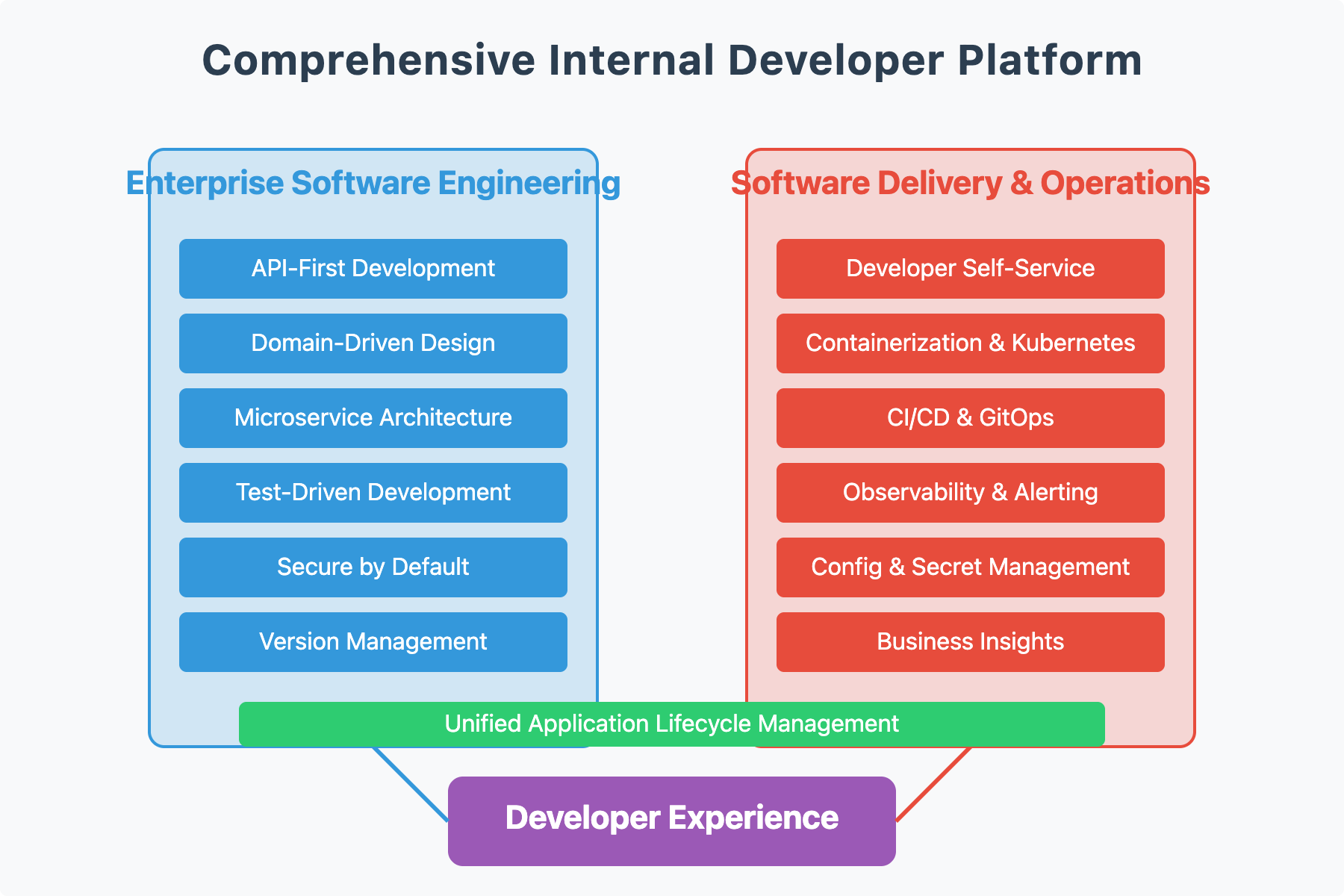
The Two Pillars of a Modern IDP
Enterprise Software Engineering
This pillar focuses on the development and architecture aspects of software creation, including:
- API-first development: Designing and building APIs as first-class citizens
- Domain-driven design: Structuring software around business domains
- Microservice architecture: Breaking applications into independent, scalable services
- Test-driven development: Ensuring quality through comprehensive testing
- Secure by default: Incorporating security from the beginning
- Version management: Tracking and controlling changes across the application
- Iterative architecture: Evolving the system design incrementally
- AI-augmented engineering: Leveraging AI to enhance development capabilities
Software Delivery and Operations
This pillar addresses the deployment, management, and operational aspects:
- Developer self-service: Enabling independent resource provisioning
- Containerization & orchestration: Packaging and managing applications
- CI/CD automation: Streamlining build and deployment processes
- Resource optimization: Efficiently managing computational resources
- Multi-cloud management: Supporting diverse infrastructure environments
- Observability & alerting: Monitoring system health and performance
- Configuration management: Handling application settings securely
- Resiliency engineering: Ensuring high availability and fault tolerance
- Business insights: Generating actionable intelligence from operations
Key Components of a Modern IDP
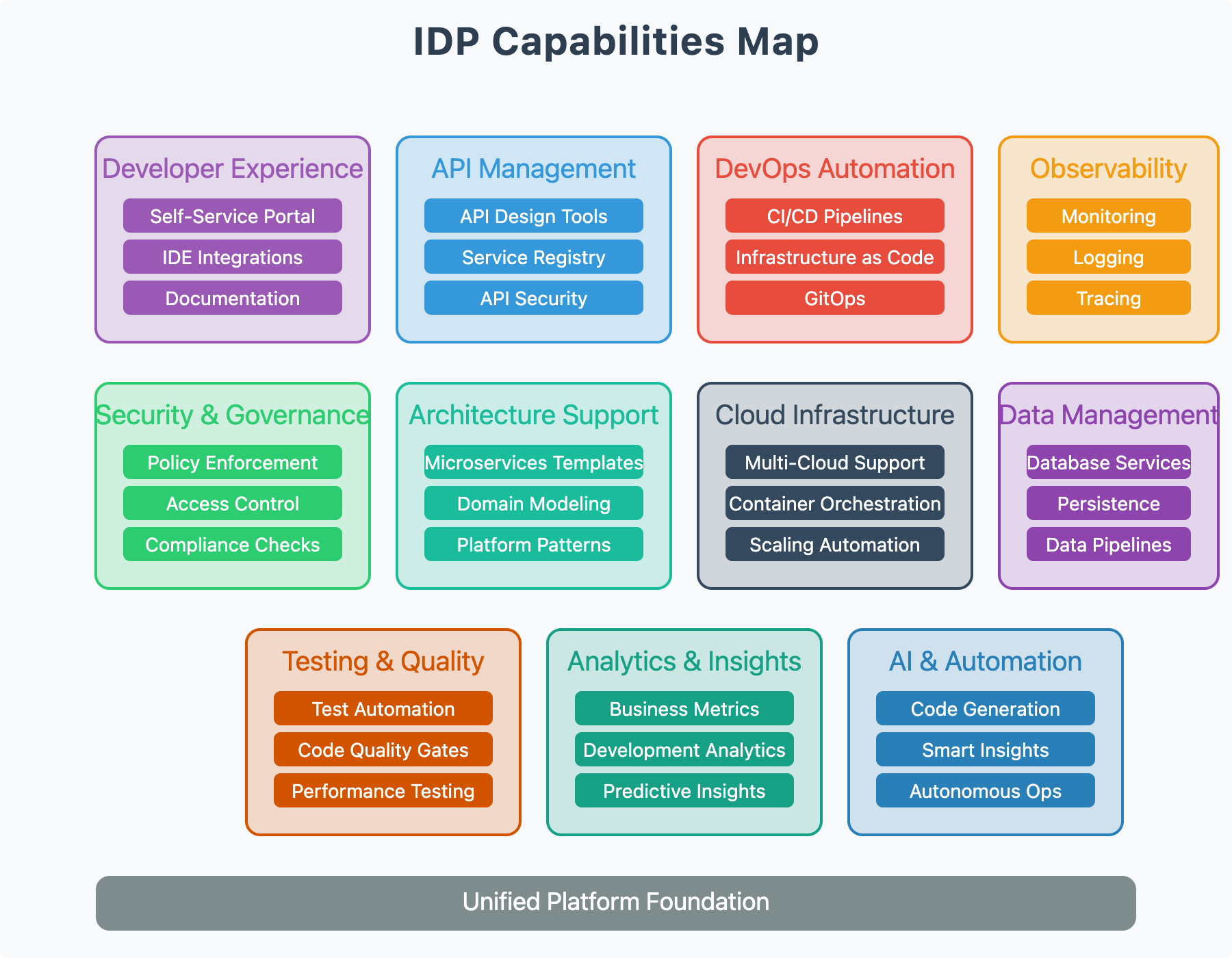
Developer Experience Portal
The portal serves as the primary interface for developers, providing access to tools, resources, and self-service capabilities. It typically includes:
- Project creation and management
- Service catalog for discovering and using available components
- Documentation and knowledge sharing
- Team collaboration features
- Development environment management
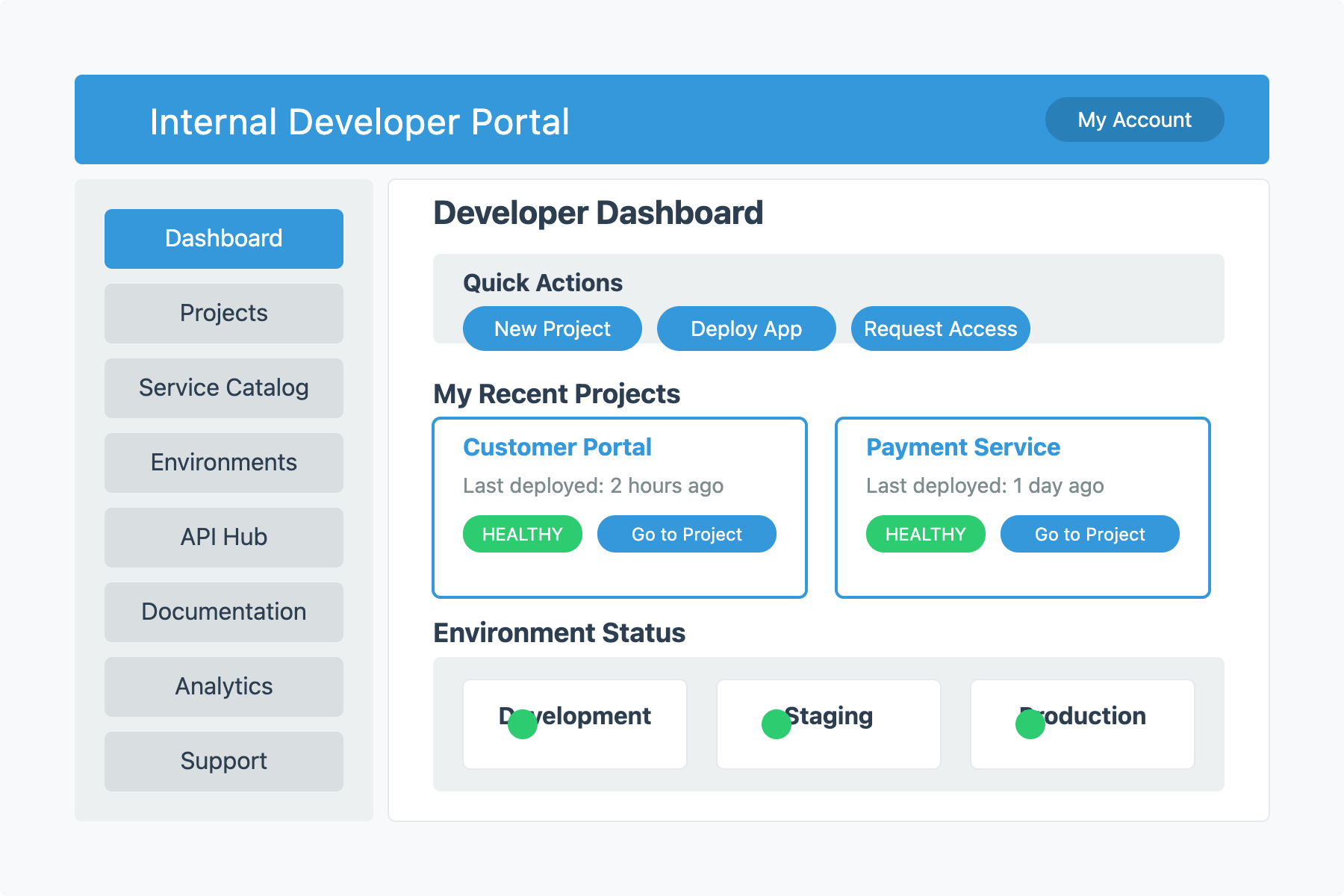
API Management Layer
The API layer enables the discovery, consumption, and governance of internal and external services:
- API design and documentation tools
- Service registry and discovery
- API security and access control
- Usage analytics and monitoring
- Version management
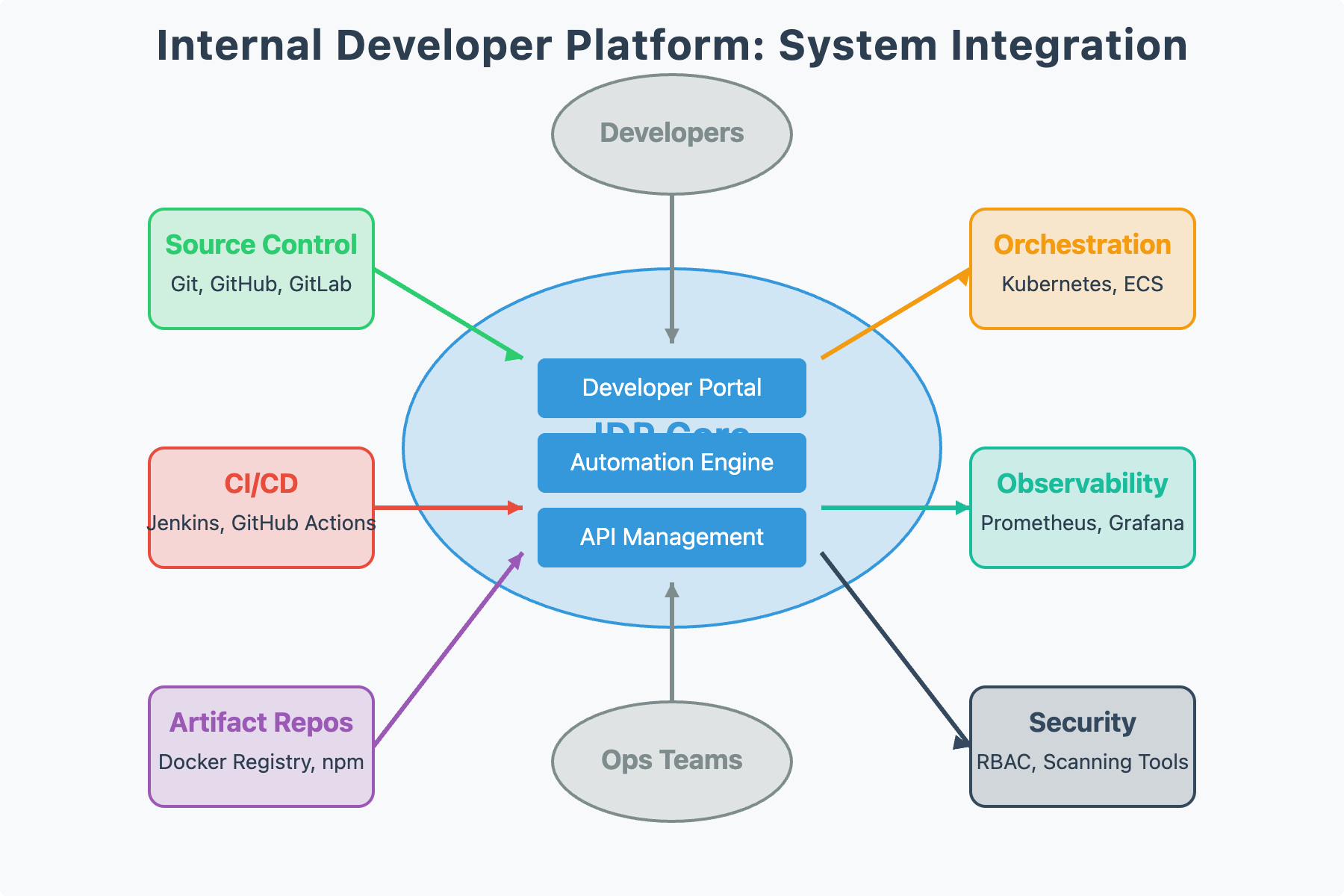
Automation Engine
The automation engine handles CI/CD processes, testing, and deployment:
- Build automation
- Test orchestration
- Deployment pipelines
- Environment provisioning
- Rollback capabilities
Governance and Security Framework
This framework ensures compliance, security, and quality standards:
- Policy enforcement
- Security scanning and compliance checks
- Access control and authentication
- Audit logging
- Standards adherence
Observability Stack
The observability stack provides insights into application performance and behavior:
- Metrics collection and visualization
- Distributed tracing
- Log aggregation and analysis
- Alerts and notifications
- Performance analytics
Implementing an Effective IDP
When implementing an Internal Developer Platform, organizations should consider the following best practices:
1. Start with Developer Needs
Begin by understanding the pain points and requirements of your development teams. The most successful IDPs address specific challenges faced by developers in your organization.
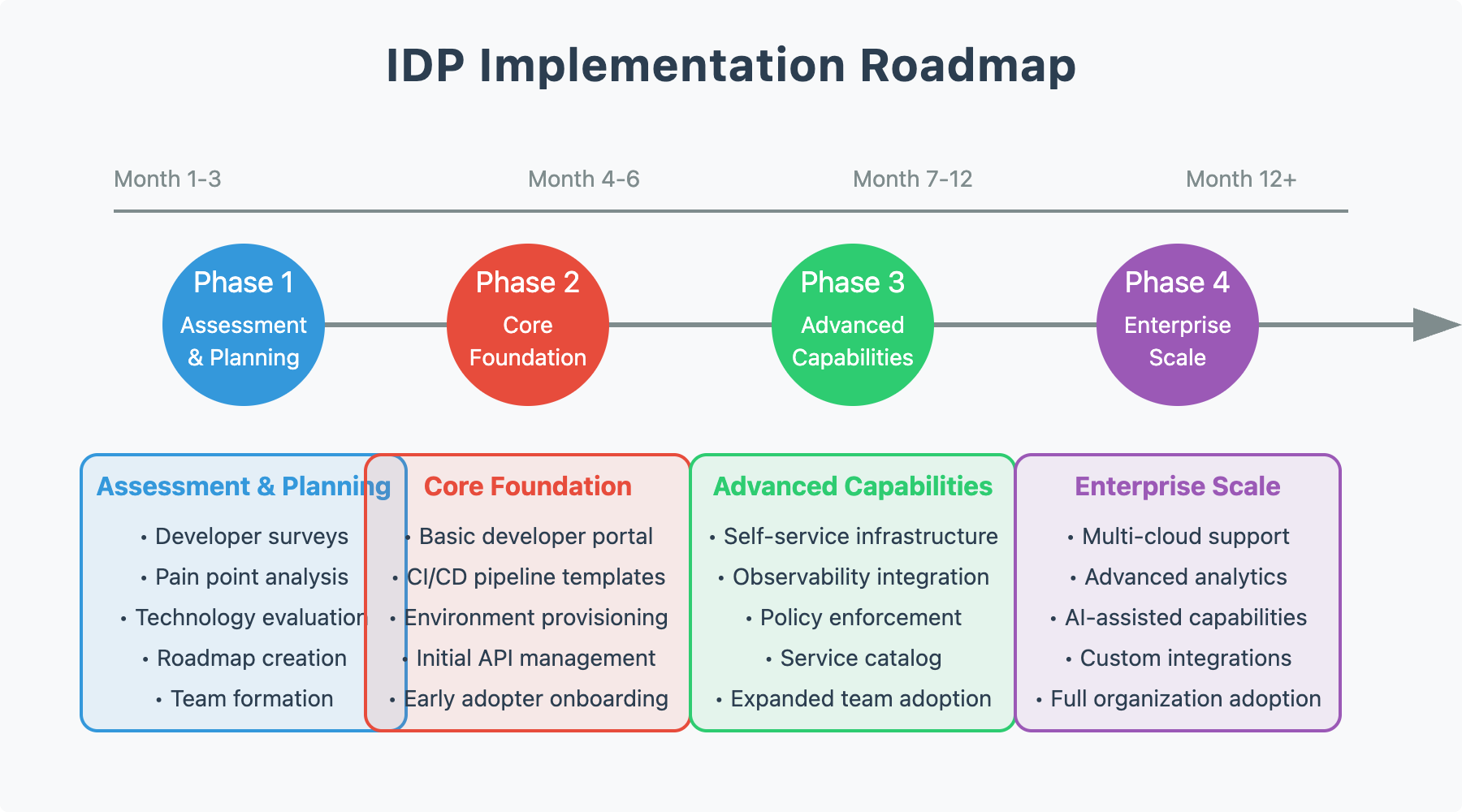
2. Adopt Incremental Implementation
Rather than attempting to build a comprehensive platform at once, start with core capabilities and expand gradually based on feedback and evolving needs.
3. Balance Standardization and Flexibility
While standardization improves governance and efficiency, excessive rigidity can stifle innovation. Successful IDPs balance guardrails with developer freedom.
4. Invest in Documentation and Training
Comprehensive documentation and training programs ensure that developers can fully leverage the platform’s capabilities.
5. Foster a Platform Engineering Culture
Cultivate a dedicated platform engineering team responsible for building, maintaining, and evolving the IDP based on organizational needs.
Measuring IDP Success
The effectiveness of an IDP can be measured through various metrics:
Developer Productivity Metrics
- Mean time to environment
- Mean time to deployment
- Development cycle time
- Code commit to production time
Operational Metrics
- Deployment frequency
- Change failure rate
- Mean time to recovery
- Infrastructure utilization efficiency
Business Impact Metrics
- Time to market for new features
- Feature adoption rate
- Development cost reduction
- Business capability delivery speed
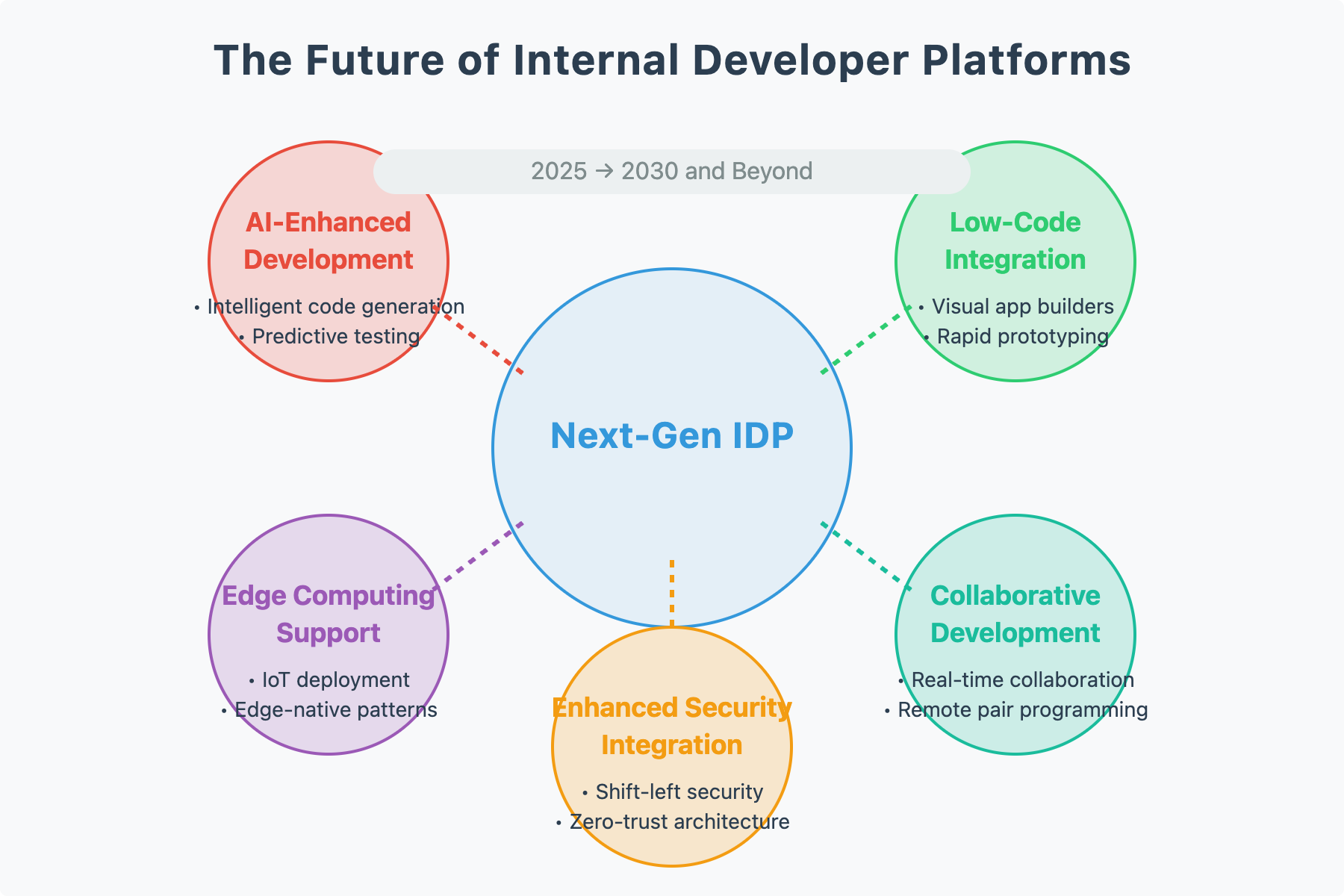
The Future of Internal Developer Platforms
As technology continues to evolve, we anticipate several trends in the IDP space:
- AI-Enhanced Development: Increasing integration of AI tools for code generation, testing, and optimization
- Low-Code Integration: Combining traditional development with low-code capabilities for rapid prototyping
- Edge Computing Support: Extending platform capabilities to support edge deployment scenarios
- Enhanced Security Integration: Deeper integration of security throughout the development lifecycle
- Collaborative Development: More features supporting distributed team collaboration
Conclusion
A modern Internal Developer Platform transcends the traditional focus on deployment automation to address the entire application lifecycle. By providing comprehensive support for both software engineering and delivery operations, an effective IDP empowers developers to focus on innovation rather than infrastructure concerns.
Organizations that invest in building or adopting comprehensive IDPs position themselves to innovate with greater speed and agility, outpace competition, and deliver exceptional digital experiences to their customers. The IDP serves as a catalyst for digital transformation, enabling enterprises to unlock their full potential in today’s technology-driven business landscape.
When evaluating or building an IDP, organizations should prioritize platforms that offer:
- Full self-service capabilities
- Support for agile, cross-functional teams
- Emphasis on reusability and composability
- Robust observability and analytics
- Strong compliance and security features
With the right IDP in place, organizations can dramatically improve their software delivery performance and focus on what truly matters: creating value for their customers.